
Your Brand is Worth Protecting
Secure Your Trademark
Before Someone Else Does.

What We Do
We help business owners protect their brand names, logos, and slogans through federal trademark registration. Most clients come to us unsure whether their name is even available, and that is where we begin.
Before you invest in branding, marketing, or signage, we take a close look at your name and identify potential conflicts. From the initial search through filing and registration, we guide you through each step so you understand the process.
Many business owners assume their name is protected simply because they formed an LLC or purchased a domain name. In reality, those steps do not provide trademark protection.
Do You Need a Trademark?
You may benefit from a trademark if you:
- Are launching a new business or brand
- Have a name or logo you want to protect
- Sell products or services online or outside Illinois
- Want to prevent others from using a similar name
- Are building a brand you plan to grow, license, or sell

Our Trademark Process

Search & Strategy
Evaluate the mark and identify potential conflicts.
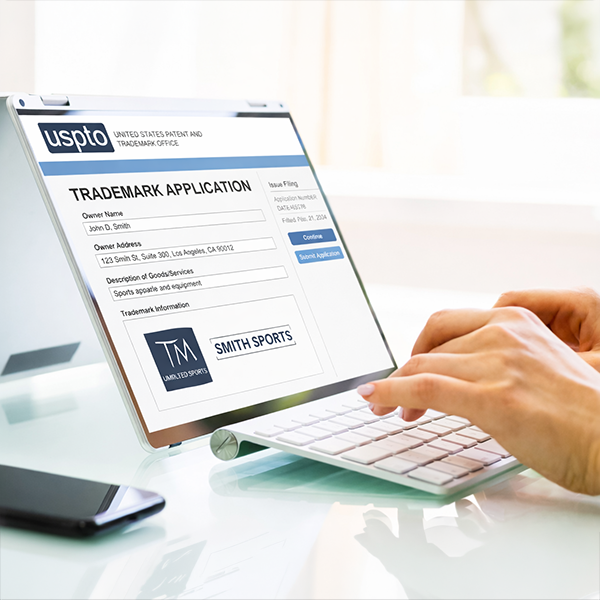
Application Process
Prepare and file the trademark application with the USPTO.
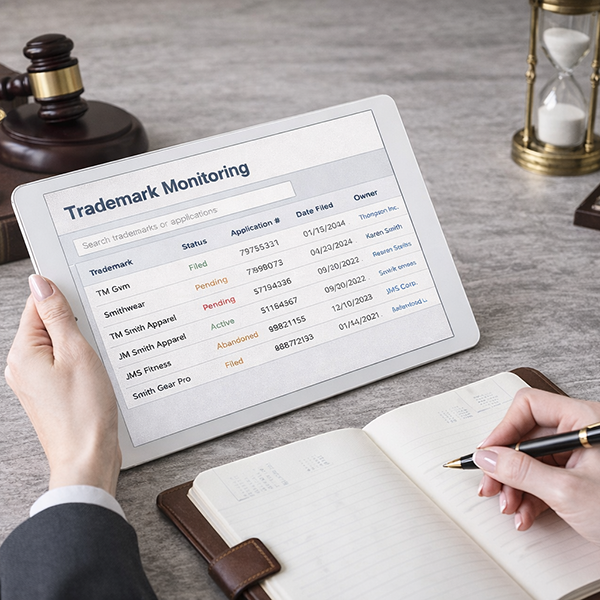
Monitoring & Response
Monitor the application and respond to any USPTO inquiries.
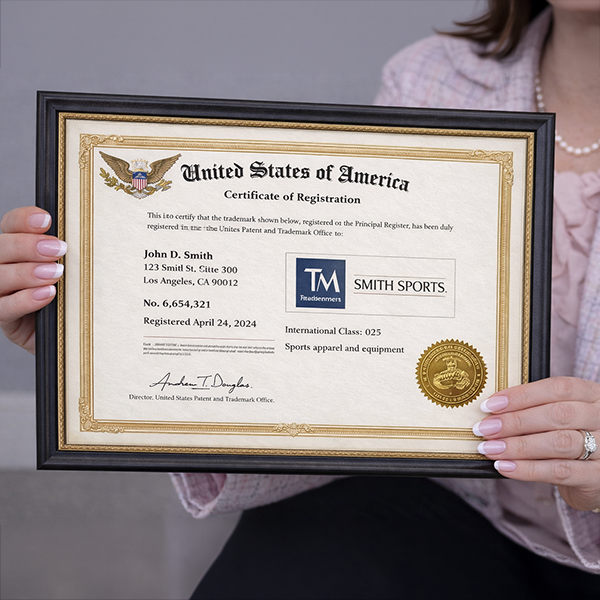
Registration & Protection
Registering the mark and advising on continued protection.
Transparent Flat Fee Pricing

Basic TM Search
$950
Federal and common law trademark search for up to 2 classes of good/services with attorney opinion letter and mark analysis.

Add On Logo Search
$390
Federal and common law trademark search with attorney opinion letter and mark analysis.

Additional Class Search
$350
Price per additional classes 3 or more. Please see description below on classes.
Trademark Application
$1600
Federal and common law trademark search with attorney opinion letter and mark analysis.
Additional Class of Goods/Services
$550
Federal and common law trademark search with attorney opinion letter and mark analysis.
Add Class Search
$350
Federal and common law trademark search with attorney opinion letter and mark analysis.
Please Note: The Above Prices Are a Good Estimate, But Each Trademark Filing is Unique and Pricing May Vary.
Additional Filing Fees Apply if the goods/service description is over 1,000 characters, use of customized class descriptions, and other fees.
Trademark
FAQs
What is a Trademark?
A trademark (TM) is a name, slogan, or logo that identifies your business as the source of your products or services. It is what distinguishes your brand from others in the marketplace.
You can trademark a business name, a brand name, a slogan, or a logo, depending on how your business is presented to the public.
While you can establish trademark rights simply by using a name in commerce, these “common law” rights are often limited and more difficult to enforce. Registering your trademark with the United States Patent and Trademark Office (USPTO) provides stronger, nationwide protection and additional legal benefits.
Why Do I Need a Trademark?
Trademarking your name, slogan or logo provides you with many benefits and puts you in a better standing to protect that Trademark from being used by someone else. Filing for Trademark protection gives the Trademark owner a nationwide priority to use the TM anywhere in the US. Filing a TM also provides notice to all businesses in the US that you are claiming rights to that name, slogan or logo. Registering a TM allows other businesses to easily search the USPTO data base to see that someone else is using the name and therefore, discourage them from using your TM.
Filing also gives the TM owner the right to sue in federal courts, provides more remedies in the case of TM infringement, gives you the right to use the Registered Trademark symbol and allows you to file the TM in other countries as well.
If you rely on a common law trademark you will not receive any of the benefits of a federal trademark registration. Even if another business is diligent in searching to see if someone else is using the name they want to use, they may not be aware that you are already using the you will be in a much better position to prevent someone else from using your Trademark if it is registered.
Why Do I Need a Trademark Search?
We highly recommend an extensive Trademark Search before filing the Trademark application. The way Trademark rights work is whoever is the first in time to use the mark has priority over anyone else who comes later to use it. Therefore, while registering the mark with the USPTO is highly beneficial it will not give you priority over anyone else who may have been using the mark before you, but did not register it.
A Trademark Search will not only examine existing Trademarks registered with the USPTO but will also search for any similar marks being used across the nation. This is an exhaustive search of dozens of databases to determine if there are any potential conflicts. This is often called a Common Law Search.
AMC Legal can perform this comprehensive search for you for $500. Though the search cannot guarantee approval, it will give a good indication of the mark’s availability. You will get the results of the Trademark search in writing in approximately 1 week.
Keep in mind, if your mark is rejected by the USPTO, they do not refund the filing fee.
What's the Difference Between a Database Search and an Attorney Search?
You may come across terms like “knockout search,” “preliminary search,” or “database search” when researching trademarks. These are often low-cost or free searches that pull results from the USPTO and other databases.
While these searches can be a helpful starting point, they typically generate a large volume of results without explaining what they mean. Not every similar name creates a legal issue, and not every difference makes a name safe to use. The key question is whether another mark is likely to cause confusion in the marketplace.
A database search on its own provides raw data. Having an attorney review the results adds an important layer of analysis. Instead of simply providing a list of names, an attorney evaluates which results are actually relevant, identifies potential risks, and explains how those risks may affect your ability to register and use your trademark.
This allows you to move forward with a clearer understanding of your options and make a more informed decision about your brand.
Understanding the results is just as important as running the search itself.
What is a Class of Good or Class of Services?
When filing a Trademark application with the United States Patent and Trademark Office (USPTO) it is necessary to select one or more “classes” of goods or services.
A class is simply a category used by the United States Patent and Trademark Office USPTO to organize different types of products and services. For example, clothing falls under Class 25, while legal services fall under Class 45. Classes 1–34 cover goods, and classes 35–45 cover services.
Classes help define your application, but they do not strictly limit your rights. Trademark protection is based on whether another name is likely to cause confusion in the marketplace. This means your rights can extend beyond your specific class to related goods or services offered in similar channels of trade.
At the same time, registering in additional classes can expand the scope of your protection, especially if your brand is used across different types of products or services. Each class requires a separate filing fee.
Choosing the correct class or classes is an important part of the application and can affect both the strength and scope of your trademark protection.
Can I Rely on a Free Trademark Search?
Free trademark searches can be a helpful starting point, but they are often limited and should not be relied on by themselves when making a final decision about your brand.
Most free tools only search exact matches or registered trademarks in the United States Patent and Trademark Office (USPTO) database. They typically do not account for similar names, variations in spelling, or marks that may create a likelihood of confusion.
They also do not identify unregistered “common law” uses, which can still have priority based on earlier use in commerce.
A comprehensive trademark search goes much further. It reviews variations of your name, similar-sounding marks, and use across multiple databases, multiple industries, and sources to identify potential risks before you file.
While no search can guarantee approval, a more thorough review provides a much clearer picture of your trademark’s availability and helps you make an informed decision.
What is the Application Process Like?
AMC Legal can prepare and submit your application on your behalf. All you would need to do is answer some questions and provide a sample of your Trademark. A business card, brochure or packaging containing your Trademark would be sufficient for the application.
Once the application is submitted, the USPTO will examine your Trademark to verify that it is unique. Once it passes the examiner, it will need to be published once a week for 4 weeks to provide notice to the public. If no one contends the mark, then your mark will be approved.
If the application is denied, the determination may be appealed. There is no refund of the application fee if this occurs. That is why it is a good idea to do an extensive Trademark search before filing the application.
What are the Steps in the Trademark Process?
AMC Legal can prepare and submit your application on your behalf. All you would need to do is answer some questions and provide a sample of your Trademark. A business card, brochure or packaging containing your Trademark would be sufficient for the application.
Once the application is submitted, the USPTO will examine your Trademark to verify that it is unique. Once it passes the examiner, it will need to be published once a week for 4 weeks to provide notice to the public. If no one contends the mark, then your mark will be approved.
If the application is denied, the determination may be appealed. There is no refund of the application fee if this occurs. That is why it is a good idea to do an extensive Trademark search before filing the application.
How Often Do I Need to Renewal a Trademark?
5 years from registration you must submit an affidavit of continued use. 10 years after you must file to renew the mark.
How Long Does it Take to Register a Trademark?
Your content goes here. Edit or remove this text inline or in the module Content settings. You can also style every aspect of this content in the module Design settings and even apply custom CSS to this text in the module Advanced settings.
When Should I File a Trademark?
Your content goes here. Edit or remove this text inline or in the module Content settings. You can also style every aspect of this content in the module Design settings and even apply custom CSS to this text in the module Advanced settings.
Do I Need an Attorney to File a Trademark?
Your content goes here. Edit or remove this text inline or in the module Content settings. You can also style every aspect of this content in the module Design settings and even apply custom CSS to this text in the module Advanced settings.
How Do I Make Sure My Trademark is Strong?
The more distinctive the Trademark the easier it is to protect. A made up word for a business name such as Kodak or Exxon are the strongest types of names to trademark. The weakest are descriptive names such as Best Plumbing. These types of names must spend years in the market and take on a secondary meaning in order to have protection. Keep this in mind when choosing your company name.
What are the Benefits of Having a Trademark?
he best way to protect a Trademark is to first register it with the US Patent and Trademark Office (USPTO). This will give notice to the whole nation that you are claiming Trademark rights in your name, logo or slogan and it will afford you additional rights that you would not otherwise have.
When Should I Use the TM or R Symbols for a Trademark?
Even before you are approved by the USPTO you can place the symbol TM after the mark in order to inform the public that you are claiming Trademark rights in the name or symbol. After your application is approved, you can then use the “r” in the circle mark to indicate a Registered Trademark
How Do I Keep My Trademark Protected?
You must also be vigilant in checking to see if anyone else is using your mark and prevent them from doing so. If you see someone using your mark and you allow them to continue using it you may be waiving your rights to stop them at a later time.
Why Work with AMC Legal?